
Guide
A customer video and the buying decision
Stars fit in a glance. A video takes more attention because you see a product or a face and hear a detail. Zaply does not promise a percentage lift. It gives you a file you can place by the price, in a Reel, or in an ad, within the customer's consent.
.
Stars, a photo, and a video
Stars can be read in a second. They say someone left a score, and nothing more. A text review holds one sentence about a product or a visit. A photo shows the thing or the place and stays silent. A video puts a face, or just the product, together with a voice and a detail, so you can place it where the customer decides, not only in the footer.
Zaply does not measure and does not promise a percentage lift in sales. It gives you a file you can place next to the price, in a Reel, or in an ad when consent allows that place. The format alone does not sell. What matters is whether the recording comes from a real order or visit, whether the consent scope covers the place you put it, and whether it is visible at the decision.
What a video carries that a score does not
In twenty seconds a customer can say what they bought or which service they used, and add one detail: the coat size, the time at the salon, the breakfast hours, the state of a bike chain at pickup. None of that is in five stars. It is also hard to see in a packshot that looks the same at every seller.
A video does not replace the description, the price list, or availability. Someone looking for a size or opening hours still reads the text. The recording sits beside that information. It does not stand in for it.
Three places where someone decides
The same file, after editing, has three frames: 9:16, 16:9, and 4:5. Each fits a different place. You do not shoot three sessions. You do approve the recording and respect the scope the customer chose before the camera.
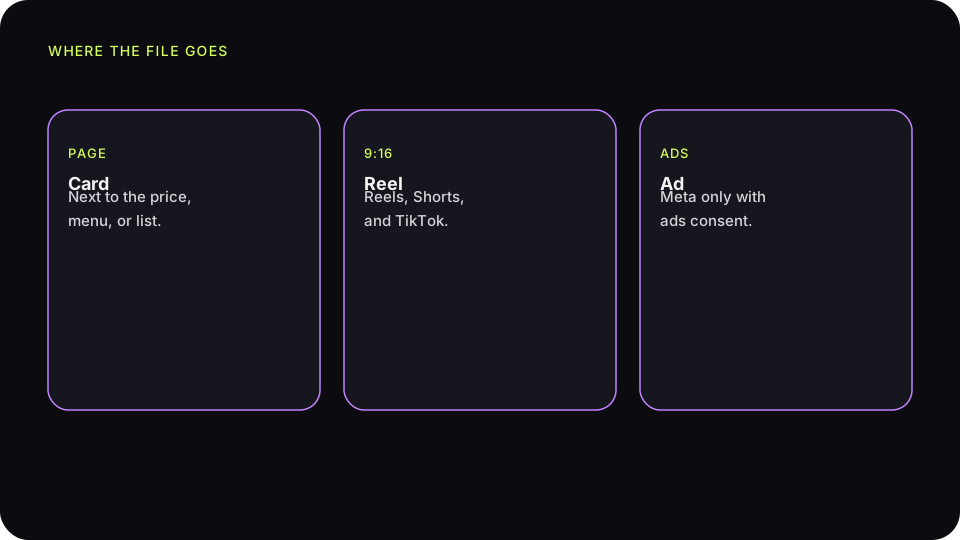
The product card or the service page
On a shop card the video sits by the price. Someone already on the page sees a person, or just the product, and hears what was in the parcel or how the portion looked. On a restaurant, salon, workshop, or hotel page the same layout works next to the menu or the price list.
The caption under the video should say it is one customer recording, not the complete set of reviews of the product or the venue. A selected set is not the full list. Text reviews Zaply does not collect can stay beside it.
Linen pillowcase, 89. Beside the price is a 16:9 file. The caption on the video: “I ordered a linen pillowcase. The parcel had one case and a label.” Under the player: “One customer recording. This is not the full list of reviews of this product.”
A Reel
9:16 goes to Reels, Shorts, and TikTok. It reaches people who have not opened the site. Captions are on the video, so it can be watched without sound. The logo and a short card with the company name close the frame when they are in the profile.
A Reel also fits social-only consent. You do not need the ads scope for it. Before you publish from the dashboard to Facebook or Instagram, the saved scope is shown. If the scope is social only, do not add that file to a paid set.
An ad
4:5 or 9:16 can run as a Meta ad when the customer chose the scope that includes ads and you approve the recording. The file replaces stock only inside that scope. You decide whether a given placement is an ad. The “Advertising material” bar for the first 3 seconds can stay on. It does not replace a notice that the customer received a code for the licence.
Social-only consent stops at Reels and social channels. You will not run a campaign on it. You update a Google Maps listing and a booking-portal gallery yourself with the downloaded file. Zaply does not publish there.
The same clip in three places
Take a recording from a local shop: the customer says she bought a coat in size M and tried it on at the counter. After editing you have three files. You put 16:9 on the shop page by the coat category. 9:16 goes to a Reel in the week the coat is in the window. 4:5 stays in the dashboard, because consent is social only and you will not run ads from this file.
A second example, a restaurant. The guest says he ordered broth and a cutlet and that it reached the table in twenty minutes. 9:16 can go to a Reel on Friday, when the venue already posts the weekend menu. 16:9 sits on the page next to the menu. You upload a file to Google Maps yourself if you want video on the listing. You do not caption it as every review of dinner.
What the format does not guarantee
More time with a face or a voice is not proof the till will grow. A recording can be critical. It can be dull. It can show a queue, a short fringe, or a chain that still rattles after the repair. That file is still material the code is due for, when the reward is set as a licence and not as a bonus for tone.
Do not promise customers that “a video will raise sales by a specific number”. Zaply does not state that number, because it does not measure it. You measure it yourself, if you measure it at all, on the shop's own data, outside this tool.
How not to break trust at the decision
Next to the price, the customer should see that the video is one recording, not a verdict of the whole clientele. Do not cut a sentence out of the edit in a way that changes the meaning, and do not add a caption the customer did not say. Captions come from the speech. Pauses drop out. The content stays.
If you publish three complimentary takes and a fourth, technically adequate and critical, sits in the dashboard, do not write “here are our customers' reviews” as if no others existed. You may choose not to publish. You may not pretend the set is complete.
The cost of a file, not the cost of a promise
You pay for the edit, not for a campaign result. One generation is one edit. You start with 3, and no card. Then a pack of 20 for 29 EUR or 50 for 49 EUR, valid for 6 months from payment. Unused generations on a paid plan do not disappear at the end of the month. Time alone does not start the next charge.
Before you buy a pack, put one free generation on a card or in a Reel and see whether you even have a place to show the file. The tool will not fix a page that has no room for video next to the price.
A business with no online shop
A bike workshop has no product card. It has a page with a price list and a Google Maps listing. At pickup the customer says what they handed over and what they got back. After approval, the 16:9 file sits on the page next to the line for a gear adjustment. The 9:16 file goes to a Reel in a week when you already show bikes from the shop. You upload the Maps file yourself. Zaply does not run that listing. Under the video on the page, one sentence: this is a pickup recording, not a list of every job.
A hotel without a voucher shop does the same at checkout. The guest says how many nights they stayed and when breakfast was served. 16:9 lands next to the room description. The Reel goes out on Sunday, when you already post open dates. You upload a video to Booking yourself if the extranet accepts one. You do not caption it as the score of every guest that week.
In both cases the code goes out for the licence, including when you do not show the video. A critical recording, for example about breakfast that ended before 8:00, stays in the dashboard. You do not add a line on the page saying the published takes are the full set. The decision this video can support is someone choosing a workshop or a property they have not visited. You cannot calculate from the frame how many of those people will come.
A recording from a bike pickup, April. The customer says what was done. This is one recording, not the full list of reviews of the workshop.